
Two Against One: How Saifedean Ammous Dismantled MMT
Two MMT-aligned economists against one Austrian. By the end, the MMT side had agreed with nearly every problem Saifedean named, and still wanted to keep the machine that causes them.
On a recent episode of the Doha Debates podcast, host Mohamed Hassan asked three economists a simple question: what is money?
In one corner was Saifedean Ammous, author of The Bitcoin Standard. In the other were Pavlina Tcherneva, president of the Levy Economics Institute and one of the leading voices of Modern Monetary Theory, and Jason Hickel of the Autonomous University of Barcelona, a degrowth scholar who spent the hour arguing for MMT-style policy. With the odds two against one, the host even joked that he'd have to step in to even things up.
He needn't have bothered. Here's what happened, and why it matters to anyone who earns, saves or spends a dollar.
Money is a good, not a government IOU
Tcherneva opened with the MMT creed. Money is a "social technology," a unit of account, an IOU. Some authority always sets it. A dollar is a measuring stick, like a centimeter.
Saifedean took that apart in about ninety seconds. Gold was money before any government alive today existed, and it kept being money after Rome fell. Trade between societies has never had a single authority setting the unit. Strangers under different rulers still traded, using money that exists outside the state.
Then he made the point MMT never answers. Throughout history, the things that worked as money were the hardest goods to produce. Clay tablets failed because clay is everywhere. Glass beads served as money in West Africa until Europeans flooded the region with glass, and then they stopped working. Scarcity isn't a footnote in monetary history. It's the whole story.
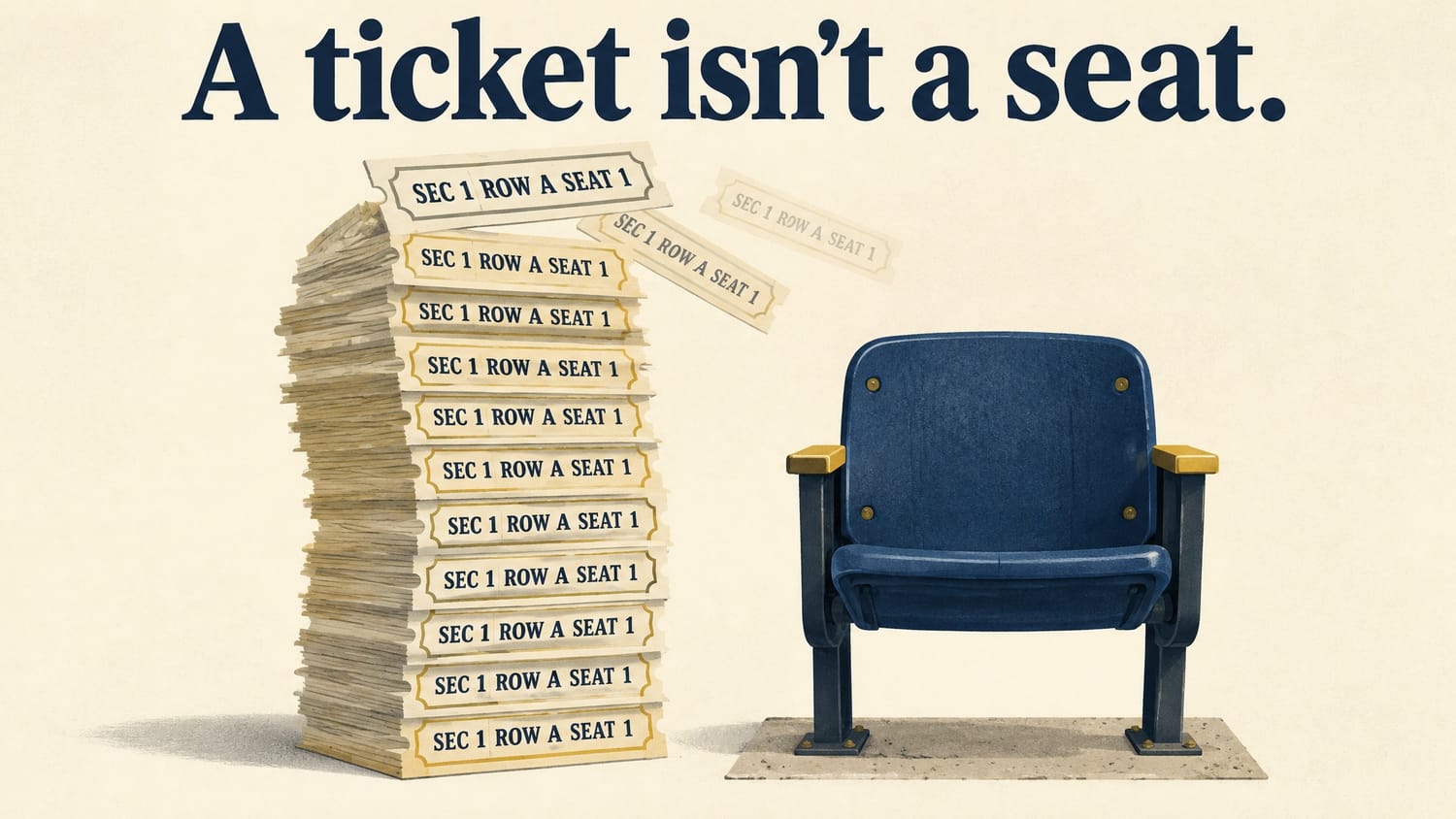
His best line of the night: a claim on money isn't money. A football ticket isn't a seat, and printing more tickets doesn't add seats to the stadium.
Then came the killer question. If money is just debt, why can't I keep writing IOUs forever and buy everything? Because eventually nobody takes them. So what keeps the government's IOUs circulating no matter how many it issues? Legal tender laws, taxes owed in its currency, and the threat of jail. Tcherneva herself said the state "compels the rest of society" to use its unit. That's not a social technology. That's coercion with an accounting department.
The quantity of money doesn't matter
This is the idea that should have ended the debate, and nobody on the MMT side touched it.
More apples feed more people. More money doesn't make anyone richer. Money's job is to carry purchasing power, and purchasing power doesn't need more units. You can run an economy on a billion dollars or a hundred trillion. You just divide the units smaller.
So what does increasing the money supply actually accomplish? One thing: redistribution. New money reaches whoever sits closest to the spigot first (governments, banks, connected contractors) before prices adjust. Everyone else pays through higher prices. Austrians call it the Cantillon Effect. Saifedean called it what it is: theft.
His real-world exhibit was Bitcoin. By his numbers, its economy has grown 50 to 60% a year for 15 years while its supply grows 1 to 2%. Growth doesn't need a printing press.
Tcherneva's reply was that money is "created in the act of credit creation." That describes how the current system works. It doesn't explain why it should.
"Just democratize it"
This is where the MMT side showed its hand.
Hickel's argument was that the money system is a fine tool controlled by the wrong people. Put it under "democratic control," then print to fund the green transition, housing and hospitals. Worried about inflation? Tax the rich to pull demand out, and impose "credit guidance" telling banks what they can and can't lend to: no fossil fuels, no SUVs, no fast fashion.
Read that again. A committee decides what gets built, who gets credit and what you're allowed to buy. That's not democracy. That's central planning with a ballot box glued to the front.
Saifedean's response was the moment of the debate. This is the oldest pitch in fiat politics. The system is fine, the people in charge are the problem, so vote for my people and we'll fix everything. Every group that has ever held the printer made that promise, and every one of them used it the same way.
Hickel admitted we've "never had" the democratic money system he describes. Saifedean's answer: we've had fiat central banking for more than a century, everywhere on Earth. That's the track record, and a utopia that has never existed doesn't outweigh it.
The real fix isn't better people at the controls. It's taking away everyone's ability to create money, and letting people keep what they earn.
Who actually built the Fed?
Tcherneva argued that "society decided," after the panics of the 1800s, that we needed elastic money and a central bank. Saifedean asked the obvious question: where, exactly, did society make that decision?
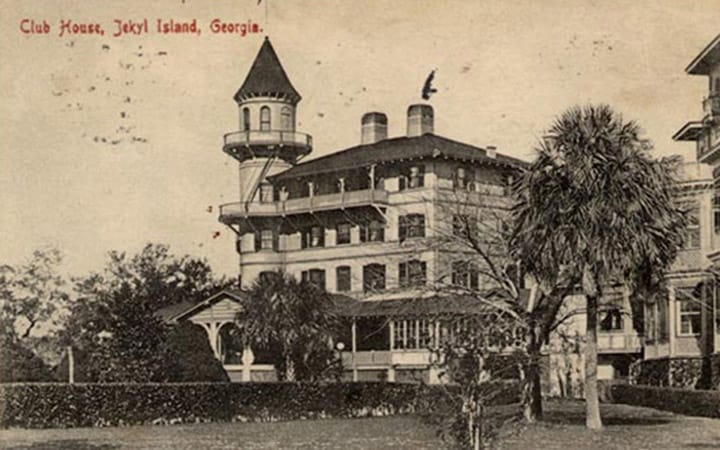
The history isn't flattering. The blueprint for the Federal Reserve was drafted at a secret 1910 meeting on Jekyll Island between Senator Nelson Aldrich, a Treasury official and a handful of Wall Street bankers. The Federal Reserve Act was signed into law on December 23, 1913. Its job was a sound, stable currency. The dollar has since lost about 97% of its purchasing power.
Even Hickel conceded on air that the central bank was "basically established by commercial bankers." He agreed that it bails out banks and pumps up asset prices for a small elite. So the people defending the system admitted that the bankers built it, and that the bankers benefit from it.
Tcherneva's comeback was that capitalism before the Fed was a string of depressions. Saifedean's answer was precise. Those busts came from inflationary bank credit. Under gold, though, they were short, and they hit the banks that caused them. With no central bank to bail them out, bad banks failed, depositors learned to demand audits, and the economy moved on. He pointed to 1873 to 1914, when the U.S. grew fast while prices gently fell.
He also exposed the trick in the "Gilded Age was miserable" argument. Fiat's defenders compare living standards in 1890 to today's and give central banking the credit. That gap came from industrialization, electricity and modern energy, not the Fed.
His analogy: telling an addict to quit isn't wishing withdrawal on him. Without the drug, there'd be no withdrawal.
Falling prices aren't a disease
Saifedean asked why deflation is supposedly a disaster. Phones, laptops and computing power get cheaper every year, and the tech industry keeps growing. Wouldn't a family facing a cost-of-living crisis love it if groceries got cheaper every year, too?
Tcherneva's answer was that debts are fixed in nominal terms. If your home's value collapses but your mortgage doesn't, you default.
That's fair as far as it goes. But ask why the house was overpriced in the first place. Cheap central bank credit inflated the bubble. Inflation sets up the crash, and then deflation gets the blame.
The printer pays for the wars
Saifedean put the Iraq war's cost at around $8 trillion. Imagine Washington asking every household for tens of thousands of dollars in cash, up front, to invade Iraq. It never happens.
Under gold, he said, governments fight until the gold runs out. Under fiat, they fight until their citizens' money runs out of value. That's a lot more runway.
Tcherneva said money doesn't fight wars; people and resources do. True. But how does the state commandeer those people and resources without asking? It prints the money to pay for them. Hickel even agreed the public would never have voted for the Iraq war, which proves the point. The printer let them skip the vote.
1971 and the house you can't afford
Then came the real world damage. After Nixon closed the gold window in 1971, money supply growth accelerated and everything repriced upward: oil, gold, copper. The 1973 oil embargo ended, and oil never went back to $3.
Saifedean's definition is worth memorizing. A fiat economist will believe absolutely anything can cause prices to rise, except an increase in the money supply. Remember 2021: supply chains, greedy corporations, greedy workers. Anything but the printing.
When Tcherneva brushed off inflation with the old chewing-gum example (who cares that gum cost a dime in the 1930s?), Saifedean pivoted to what actually matters: housing.
When cash loses value every year and savings accounts can't keep up, people turn their houses into savings accounts. They buy second and third homes, not because they want to be landlords, but because holding cash means watching it melt. The 25 year old trying to buy a first home isn't competing with other 25 year olds. He's bidding against 65 year olds parking their retirement savings in real estate.
That's the housing crisis. Not greed. Not "capitalism." Broken money.
The leaking bucket
Asked what he'd tell his younger self, Hickel said not to get "overly obsessed" with understanding money. Saifedean said the opposite: it's the most important thing to understand.
His closing image is the one to remember. You can work as hard as you want to fill a bucket. If it leaks, it doesn't matter. And if the experts around you keep telling you to ignore the leak and work harder, consider the possibility that they benefit from it.
The leak is inflation, and the government drilled the hole. No amount of "democratic control" over the drill will fill your bucket.
Plug the hole.
FREE MINDS.
FREE MARKETS.
SOUND MONEY.
Understand the System. Protect What You've Built. Preserve Your Sovereignty.
Join thousands of readers exploring money, markets, monetary history and sound money.
ABOUT
FREE MINDS.
FREE MARKETS.
SOUND MONEY.


